
Concrete Densifying Services Denver
Discover how our concrete densifying services strengthen and enhance the durability of commercial and industrial floors in and around Denver, CO. Learn about the benefits and process!
Concrete Densifying
At General Industrial Flooring, we deliver premium concrete densifying solutions tailored to the needs of commercial and industrial spaces in Denver, CO, and the surrounding areas. We understand the importance of durable, high-performing floors for your business and use advanced techniques and top-tier materials to provide long-lasting results.
A concrete densifier is primarily used in warehouses, distribution centers, and on other industrial and manufacturing floors. It can also be combined with concrete grinding to reduce dust and serve as a substitute for a sealer. Additionally, it’s an excellent choice for hardening the concrete before applying a sealer in a grind-and-seal process.
For a clean-and-seal approach, densifiers offer a more resilient floor without the glossy finish of a traditional sealer, making it a versatile solution for various industrial needs.
What Is Concrete Densifying?
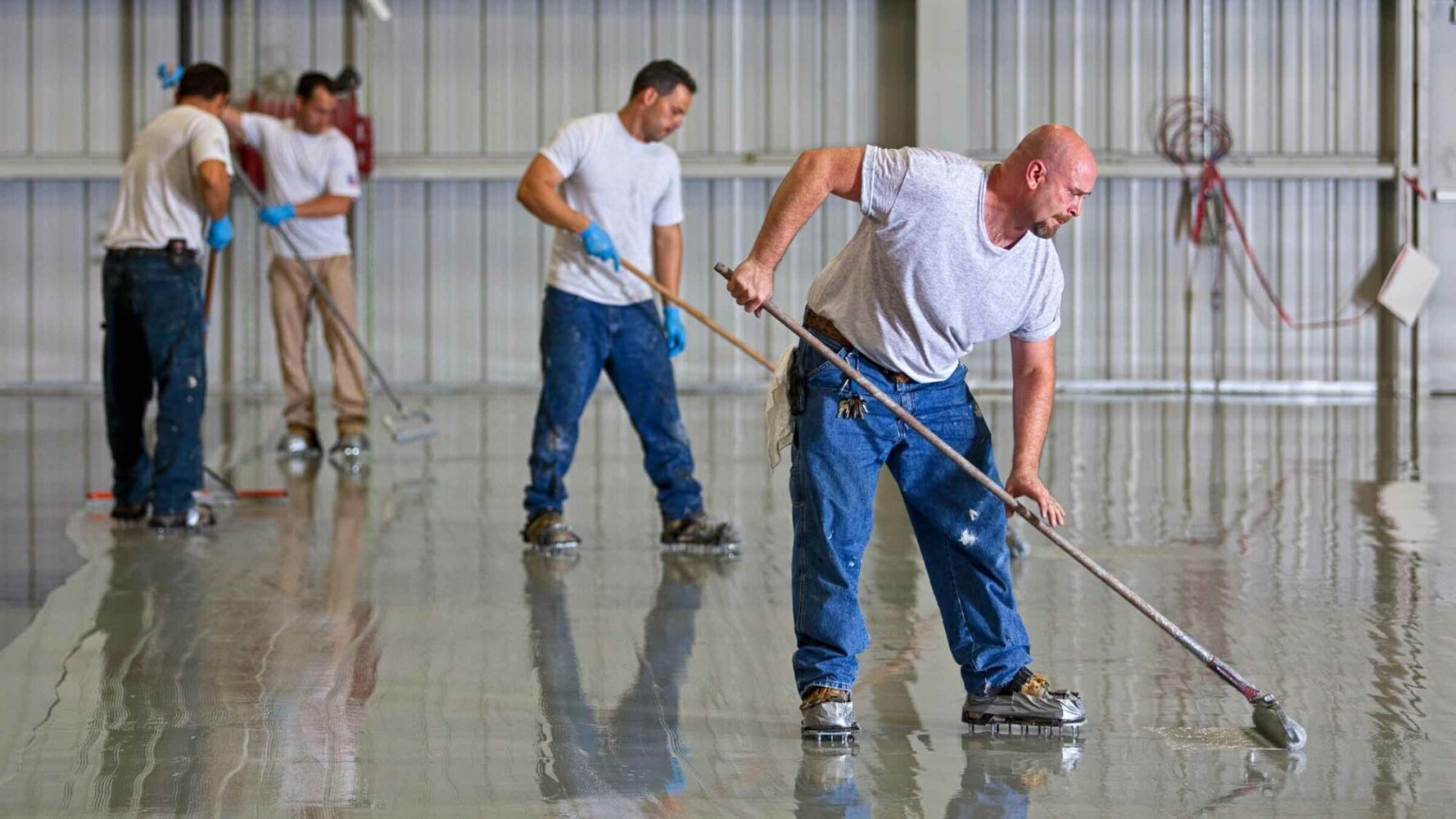
Concrete densifying strengthens and enhances concrete surfaces by using a concrete densifier. This chemical solution penetrates the surface and triggers a chemical reaction with in the concrete. The reaction fills the pores and hardens the surface.
Densifying can be an effective floor treatment on it’s own or it be used in conjunction with grinding, polishing and sealing processes as well.
This densifying process forms the foundation for polished concrete floors and is integrated during the concrete polishing process. During concrete polishing, we apply the densifier at a specific stage to densify the concrete surface and allow for a better concrete polish.
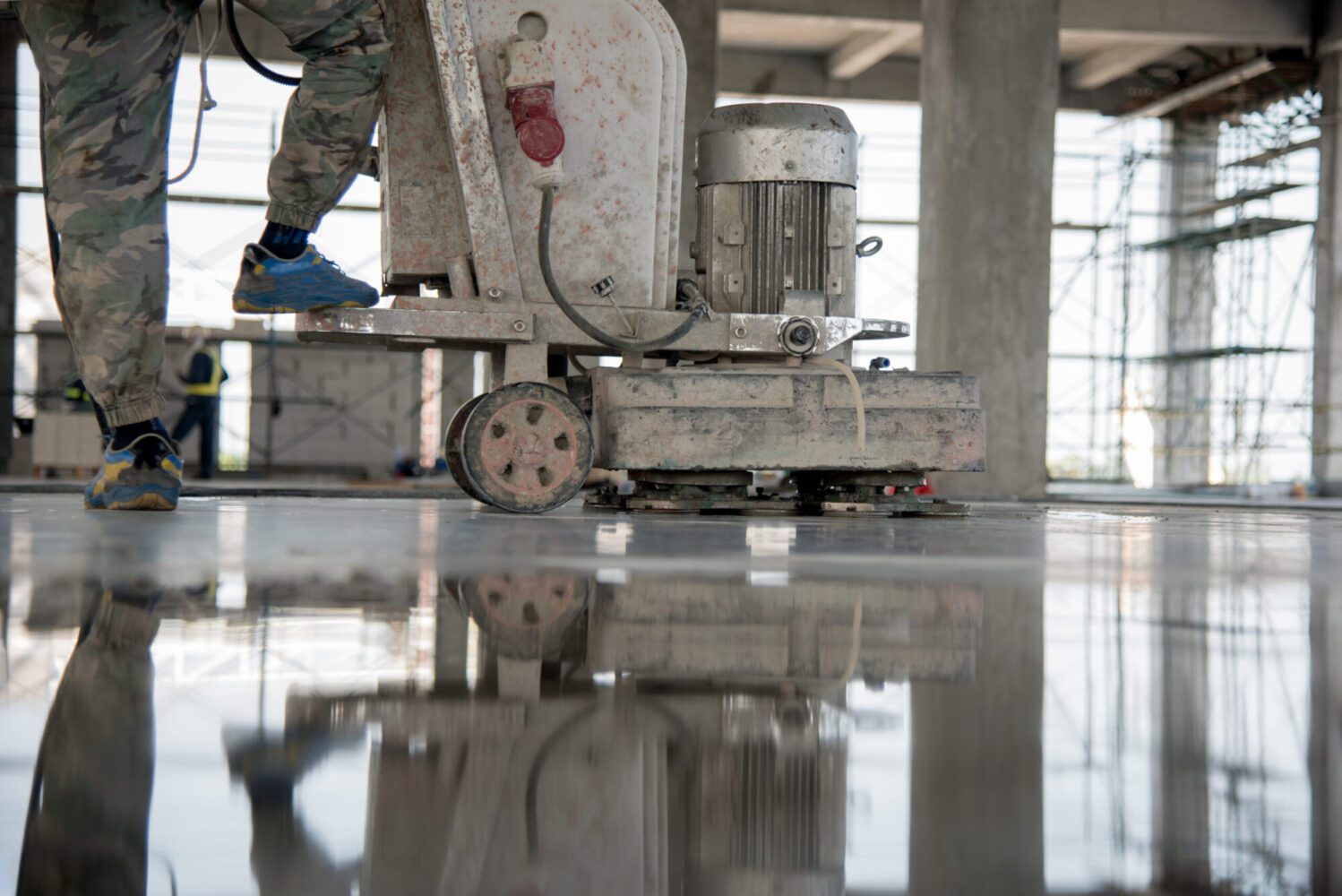
Densifying occurs after the concrete is harshly ground with metal diamonds to smooth the surface and remove scratches. As we transition into resin diamonds, we first densify the floor. This achieves a durable and polished finish.

How a Concrete Densifier Works
A densifier penetrates the concrete surface and initiates a chemical reaction. There are various different densifier types. This chemical reaction strengthens the floor by:
- Filling microscopic voids and pores in the concrete.
- Converting soft compounds into a hard, stable material.
- Increasing density and resistance to wear and dusting.
This process results in a densified concrete surface capable of withstanding heavy traffic, spills, and abrasions—ideal for industrial and commercial environments.
Why Choose Concrete Densifying?
Concrete densifying offers several significant benefits:
- Enhanced Durability: Densified floors withstand heavy machinery, forklifts, and foot traffic without significant wear and tear.
- Simplified Maintenance: The process reduces dusting and makes cleaning easier, reducing maintenance time and costs.
- Improved Appearance: Densification creates a polished, professional finish that enhances the look of your space.
- Versatility: You can use densifying techniques for various commercial and industrial applications, from warehouses to showrooms.
The Polishing Process and Densification
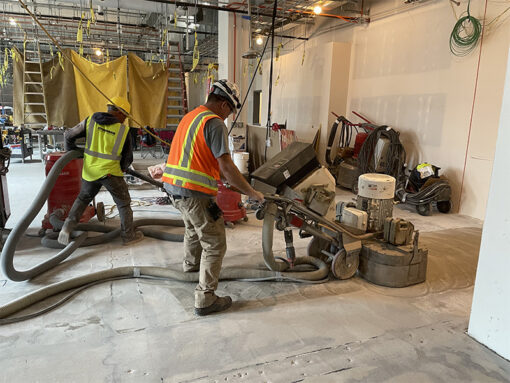
Densifying plays a critical role in achieving the polished look and durability of concrete floors. The polishing process begins with grinding the surface using metal diamonds. These abrasives come in various grits, such as 18/20, 30/40, 60/80, or even 120, and the selection depends on the condition of the slab and the desired result.
- Initial Grinding: If the floor requires extensive preparation—such as removing coatings, adhesives, or significant imperfections—we may use highly aggressive diamonds like PCDs (polycrystalline diamonds). These are effective for material removal. For general grinding, we typically start with 18/20 diamonds to grind through the surface, exposing aggregate or removing the surface cream and fines. Alternatively, we may begin with 30/40 or 60/80 grit diamonds when the floor is in better condition.
- Transitioning to Polishing: After achieving a scratch-free surface, we switch to transitional diamonds, usually in the 30, 50, or 100 grit range, depending on the slab’s condition. This step removes remaining scratches and begins preparing the surface for polishing. In some cases, such as a grind-and-seal process, we may stop here if the surface meets the desired finish.
- Polishing with Resin Diamonds: The polishing phase begins with resin diamonds, starting at 100 or 200 grit. The progression typically moves through 400, 800, 1500, and up to 3000 grit, depending on the level of gloss desired. Most commercial floors achieve a high-quality finish at 400 or 800 grit, while 1500 and 3000 grit create a highly reflective, mirror-like appearance.
Finally, we apply a polish guard to seal and protect the surface, followed by burnishing it into the floor for added durability and an elegant sheen. This comprehensive approach ensures a sleek, reflective finish that not only enhances the aesthetic of your space but also adds long-lasting protection.
Why Work with General Industrial Flooring?
Since 1989 businesses in Denver have trusted us for their concrete densifying needs because we:
- Specialize in Commercial Projects: We focus only on commercial and industrial flooring. We make sure to deliver results that meet your needs.
- Use the Best Materials: We apply only the best concrete densifiers to guarantee a durable, polished finish.
- Provide Tailored Solutions: Whether you need a concrete densifier and hardener, a concrete densifier sealer, or a customized plan, we deliver results that exceed expectations.
Frequently Asked Questions
1. When should I apply a concrete densifier?
A concrete densifier is most effective when it is applied after a floor has been ground with a grinder. This opens up the concrete and allows for a densifier to penetrate the slab better. In certain circumstances, such as with freshly poured concrete, grindingmay not be wholly necessary.
2. How does a densifier work?
When applied, a densifier penetrates the concrete and reacts with calcium hydroxide to form calcium silicate hydrate, which hardens the surface and improves durability.
3. What’s the difference between a concrete densifier and sealer?
A densifier hardens the concrete from within, while a sealer adds a protective layer on the surface. Using both together maximizes durability and stain resistance.
4. What changes should I expect after applying a concrete densifier?
Before densifying, the surface is porous and prone to dusting. After densification, the concrete becomes denser, stronger, and polished, with an enhanced appearance and resistance to wear.
General Industrial has been a pleasure to work with. Andrew was very responsive from the time we contacted him to check on our floors up to the last day of the repair. He is very knowledgeable and honest with the work that needs to be done. Tim, who worked our floor was great and he did an amazing job on the repair. We are glad we found general industrial and they were able to deliver an amazing job at such a short notice.
Serving Denver and Beyond
At General Industrial Flooring, we specialize in concrete densifying for commercial and industrial clients in Denver, CO, and the surrounding areas.
Whether you need a densifier for concrete to strengthen a warehouse floor, a concrete densifier sealer for added protection, or a full-service flooring solution, we’re here to help.