
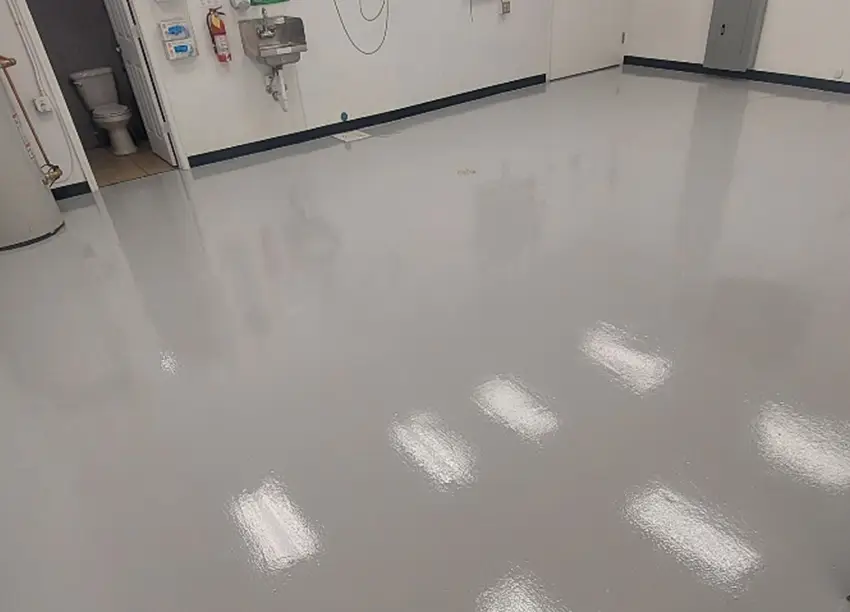
Urethane Cement Flooring
Industrial warehouses bear a lot of moving parts. Liquid spills, daily cleanings, high foot traffic and heavy machinery are all elements of a food and beverage processing warehouse. Therefore, these facilities require an easy to clean, non-slip flooring that is resistant to varying temperature and liquids.
Cracks and gaps in the flooring give bacteria and debris a place to build up creating a hazardous work environment. In other words, a seamless and antimicrobial surface is the perfect solution to avoid such issues.
Urethane cement is the perfect solution for handling these dilemmas. Expect a functional, durable, and long-lasting food and beverage warehouse flooring with urethane cement.
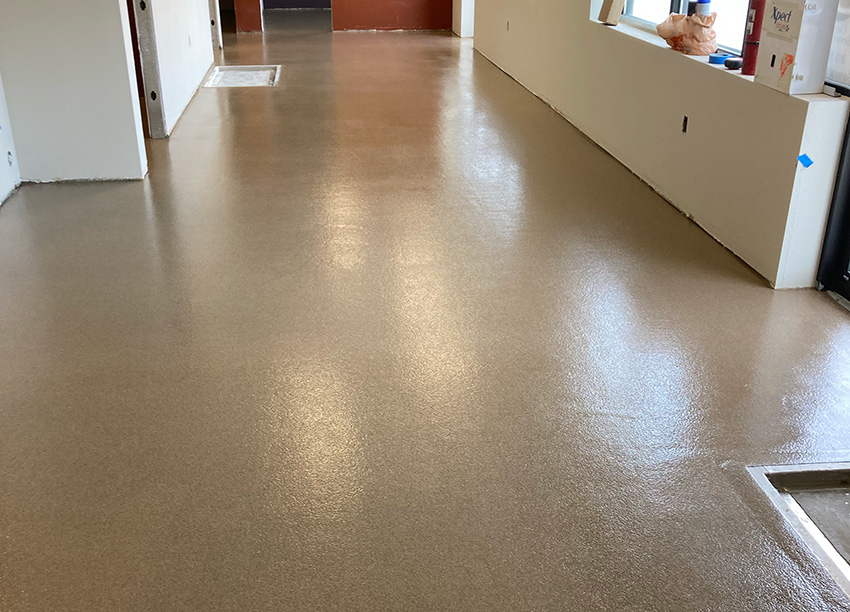
Epoxy Resin Flooring
Epoxy floor coatings is another popular solution although it does not last as long as urethane cement. This decorative option is a quick, simple, and affordable solution for food and beverage processing facilities.
The biggest difference between epoxy and urethane cement is durability and heat resistance. Epoxy consists of multiple layers of epoxy and therefore can damage from heavy equipment and hot water. However, some food and beverage processing facilities aren’t as demanding and epoxy can be a great solution. Additionally, it’s perfect for a public front house space.
We are happy to speak with you in more detail about your project to see which solution is best.
Food and Beverage Warehouse Urethane Flooring
The heavy demands of a food and beverage manufacturing space frequently calls for durable, tough flooring systems. Urethane cement is the perfect solution. Furthermore, this highly resilient coating ensures protection and longevity, perfect for the food and beverage processing industry.
Urethane cement sits in the category of resinous flooring although it’s not exactly an epoxy system.
Here’s why Urethane cement works:

Durable
These urethane cement floors are impact and abrasion resistant.

Thermal Shock
Stability
Urethane cement holds up well to pressure cleaning and won’t damage when exposed to heat.
Chemical
Resistant
Most common chemical exposure will not affect the integrity of Urethane cement.
Skid Resistant
A textured final coating on urethane cement will prevent slips and other accidents from occurring.
Seamless Coating
Urethane cement floors are installed on top of a concrete slab along with an optional 4″ or 6″ cove. The seamless surface protects against debris and other materials from getting caught in gaps or cracks.

Virtually Odorless
With the right equipment, installing a urethane cement flooring system is a relatively quick, odorless process.

USDA Approved
The antimicrobial properties of urethane cement allow for a hygienic workspace.
If you’d like to request a quote or learn more about our services, please connect with us. We look forward to working with you.
303-762-1600
Durable
These urethane cement floors are impact and abrasion resistant.
Thermal Shock Stability
Urethane cement holds up well to pressure cleaning and won’t damage when exposed to heat.
Chemical Resistant
Most common chemical exposure will not affect the integrity of Urethane cement.
Slip Resistant
Urethane cement is installed with various levels of non-slip properties while remaining easy to clean.
Seamless Coating
Urethane cement floors are installed on top of a concrete slab along with an optional 4″ or 6″ cove. The seamless surface protects against debris and other materials from getting caught in gaps or cracks.
Virtually Odorless
With the right equipment, installing a urethane cement flooring system is a relatively quick, odorless process.
USDA Approved
The antimicrobial properties of urethane cement allow for a hygienic workspace.
Epoxy Resin Flooring
Epoxy flooring is an attractive, simple option for less demanding food and processing facilities. This flooring is a quick installation process applied directly on top of the existing concrete flooring. Epoxy can also be decorated with a multitude of colors and textures to give your space an aesthetic edge.
Non-Slip Surface
To make epoxy surfaces skid and slip resistance we apply quartz sand or vinyl chips. This is important to avoid unnecessary accidents.

Easy Installation
Installing epoxy flooring is a quick and easy process when done correctly. In demanding environments, epoxy will eventually need to be fixed or replaced due to its flexible, resinous qualities.

Affordable
Epoxy is the most popular solution due to the low cost. We suggest epoxy unless you absolutely need something to handle a more demanding space. It can also be used as a front house option if you have a public area.
Non-Slip Surface
To make epoxy surfaces skid and slip resistance we apply quartz sand or vinyl chips. This is important to avoid unnecessary accidents.
Easy Installation
Installing epoxy flooring is a quick and easy process when done correctly. In demanding environments, epoxy will eventually need to be fixed or replaced due to its flexible, resinous qualities.
Affordable
Epoxy is the most popular solution due to the low cost. We suggest epoxy unless you absolutely need something to handle a more demanding space. It can also be used as a front house option if you have a public area.
Food and Beverage Processing FAQs
Answers to common questions about flooring for Food and Beverage Processing
What is the best floor for a food processing plant?
Urethane cement, also called polyurethane cement, is the standard food grade flooring for food and beverage plants. It stands up to hot water, steam cleaning, sanitizers, fats, sugars and organic acids, and it handles the thermal shock of moving between hot washdown and cold rooms. It is installed seamlessly with a coved base so there are no joints for bacteria to collect in. Epoxy flooring for food processing can work in dry packaging and storage areas, but it does not handle hot washdown as well.
Is your flooring USDA or FDA compliant?
The flooring we install in food and beverage processing facilities complies with USDA and FDA guidelines. Compliance depends on the specific product and how the finished room is built, not on the flooring type alone. We provide the manufacturer’s compliance documentation for the exact system we install with our submittals.
Can you install flooring in coolers and freezers?
Yes. Urethane cement and various epoxies and polyaspartics can be installed in cold rooms and handles temperature cycling well. We plan cure times so the room can come back down to temperature on schedule. The lowest install temperature for the slab should be 50 degrees and ambient air temperature should be >50 degrees as well. If possible, increasing those temperatures to closer to 60-70 degrees results in a better floor overall. Often to increase temperatures requires tenting and selective heating, or closing of portions of the facility until the day after installation is complete before returning to refrigerator/cooler temperatures. We also handle cold storage concrete repair, including cracked slabs and failed joints in existing coolers and freezers.
How do you handle drains and slope?
We build a slope to trench and floor drains into the floor system, and we tie the floor tightly into drain bodies so water cannot get under the floor at the edges.
How long will my plant be down?
TMost urethane cement systems can take foot traffic within about a day, and many projects are phased so lines can keep running. Depending on size, it takes a day for each coat to dry and a day to install cove. In total, 1-3 days is typical for most smaller projects depending on the system being installed or repair being performed.
Expert Food and Beverage Processing Flooring in Denver
Whether it’s a new or existing project we are here to serve you. We work with general contractors and individual business owners alike. Give us a call or send us an email to discuss the specifics of your project.
303-762-1600