
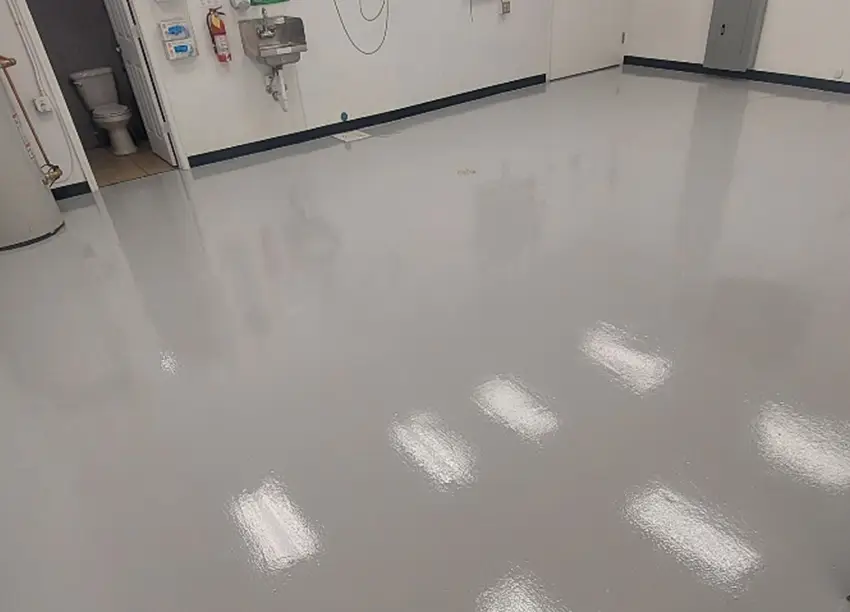
Commercial Kitchen Epoxy Flooring
Historically this task has fallen to hard to clean, slippery ceramic tiles with grout lines that collect food and debris.
Fortunately, commercial kitchen flooring epoxy solutions exist that tackle all of these problems providing a truly superior commercial kitchen floor.
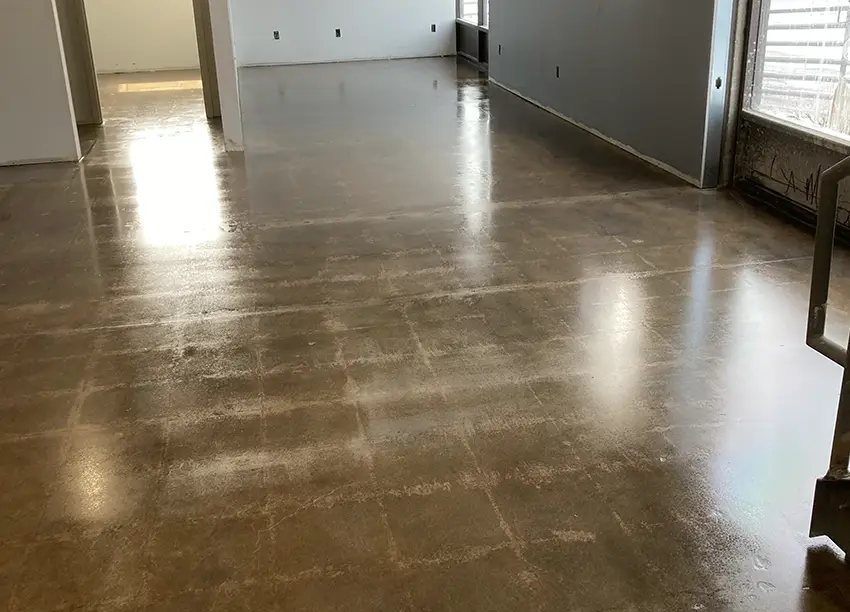
Front of House Flooring
Decorative epoxy flooring coatings can provide a good front of house flooring solution for your restaurant. We think, however, polished concrete is often a better flooring choice.
Polished concrete in a restaurant provides a great industrial look that many modern restaurants desire. It also offers non-slip properties and an attractive appearance.
Restaurant Kitchen Flooring
When it comes to commercial kitchen epoxy floor coatings, one would have a difficult time doing better than urethane cement. This high durability, high resiliency floor looks great and provides a perfect fit for the food industry. Urethane Cement is not technically an epoxy system, but falls under the same family of resinous flooring. Urethane cement floors offer these advantages:

Durable
Tougher than concrete, these floors are impact and abrasion resistant.

Thermal Shock
Stability
Won’t soften or fail when exposed to heat. Urethane cement holds up well to hot water and steam cleaning.

Chemical
Resistant
Able to withstand daily cleanings and periodic deep cleaning and disinfecting without damage.

Slip Resistant
Urethane cement is installed with various levels of non-slip properties while remaining easy to clean.
Seamless Flooring System
Usually installed with a 4″ or 6″ cove, these floors are installed over a concrete slab. There are no grout lines or places between floors and walls for debris to get caught.

Low Odor, Fast Install
Urethane cement can be installed quickly in kitchens and offers low to no odor installations allowing for a quick return to service.

Appearance
These floors look great. Coupled with great durability, they continue to look great for many years.

USDA Approved
Seamless, resistant floors prevent contaminants from bacteria, mold and fungus etc.
Durable
Tougher than concrete, these floors are impact and abrasion resistant.
Thermal Shock Stability
Won't soften or fail when exposed to heat. Urethane cement holds up well to hot water and steam cleaning.
Chemical Resistant
Able to withstand daily cleanings and periodic deep cleaning and disinfecting without damage.
Slip Resistant
Urethane cement is installed with various levels of non-slip properties while remaining easy to clean.
Seamless Flooring System
Usually installed with a 4" or 6" cove, these floors are installed over a concrete slab. There are no grout lines or places between floors and walls for debris to get caught.
Low Odor, Fast Install
Urethane cement can be installed quickly in kitchens and offers low to no odor installations allowing for a quick return to service.
Appearance
These floors look great. Coupled with great durability, they continue to look great for many years.
USDA Approved
Seamless, resistant floors prevent contaminants from bacteria, mold and fungus etc.
Polished Concrete for Restaurant Front of House Areas
Polished concrete provides an attractive, resilient front of house option for restaurants. We can polish concrete up to the point of a dull shine all the way up to a highly-reflective, nearly mirror finish. Because of this, you can customize the appearance of the floor.
Non-Slip Surface
It’s a surprise to many people that polished concrete, while sometimes looking as smooth as glass, is not actually slippery.
Low Maintenance
Typical maintenance for polished concrete floors involves simple daily mopping with a neutral cleaner. This step alone will mostly maintain the shiny finish. An infrequent burnishing of the floors will restore any lost shine.
Durable
It should be no surprise that concrete is durable to begin with. However, part of polishing concrete is applying a densifier. This actually increases the durability of the concrete surface being polished.
Because of this, you can be confident these floors will look great for a great many years to come.
Non-Slip Surface
It's a surprise to many people that polished concrete, while sometimes looking as smooth as glass, is not actually slippery.
Low Maintenance
Typical maintenance for polished concrete floors involves simple daily mopping with a neutral cleaner. This step alone will mostly maintain the shiny finish. An infrequent burnishing of the floors will restore any lost shine.
Durable
Tougher than concrete, these floors are impact and abrasion resistant.
Restaurant and Commercial Kitchen FAQs
Answers to common questions about flooring for restaurants and commercial kitchens
What flooring do health inspectors want in a commercial kitchen?
Inspectors look for floors that are smooth, durable, nonabsorbent and easy to clean, with a sealed, coved joint where the floor meets the wall in areas that are washed down. That is why the best commercial kitchen flooring is a seamless resinous system with an integral epoxy or urethane cove base. It meets those requirements better than tile, whose grout lines trap grease and bacteria.
Urethane cement supports forklift traffic and tolerates abuse while allowing for a seamless coating to be applied. This durable coating additionally better resists stains and spills as well as tolerates chemicals better than densified or polished concrete.
Epoxy or urethane cement for a restaurant kitchen?
For the back of house, we usually recommend urethane cement. Hot water, steam cleaning, grease and freezer doors cause thermal shock that can crack or debond commercial kitchen epoxy flooring over time. Urethane cement is more durable, better tolerates thermal shock as well as high sustained heat, and offers better longevity due to its thickness and durability, limiting equipment move in/move outs as well as down time. Restaurant epoxy flooring or polished concrete often works well in the dining room and front of house.
How long will my kitchen be closed?
Depending on the materials selected, kitchen size, and existing flooring to first be removed, Most kitchens can be completed in 3-5 days and are back in service 24 hours after the install is complete.
Can you slope the floor to the drains?
Yes. We can build slope into the floor so water runs to trench or floor drains instead of pooling, which is a common cause of slips and health-code issues. Drain heights may need to be adjusted to the proper heights as well.
Is a resinous kitchen floor slippery?
When properly installed, resinous flooring systems in kitchens are not slippery. We broadcast aggregate into the floor to give it texture, and we can increase the texture in wet areas like the dish pit and around fryers. A qualified professional installer, like we are, can adjust the amount and size of aggregate to achieve the right balance between cleanability and non-skid. A poorly installed floor will often have undesirable exposed aggregate that catches mop heads, but when done right, all aggregate is coated over, creating a great non-skid profile while still being cleanable.
Do you repair existing kitchen and food service floors?
Yes. Food service flooring repair is common work for us: failed tile and grout, worn or peeling epoxy, damaged cove base and low spots that hold water. Small areas can be patched, and floors that are failing throughout are usually replaced with urethane cement.
Professional Food Service Flooring in Denver
Whether your project is a new build or a refresh of an existing space, we can help. We work with general contractors as well as with restaurant owners directly. Give us a call or send us an email to discuss the specifics of your project.
303-762-1600