
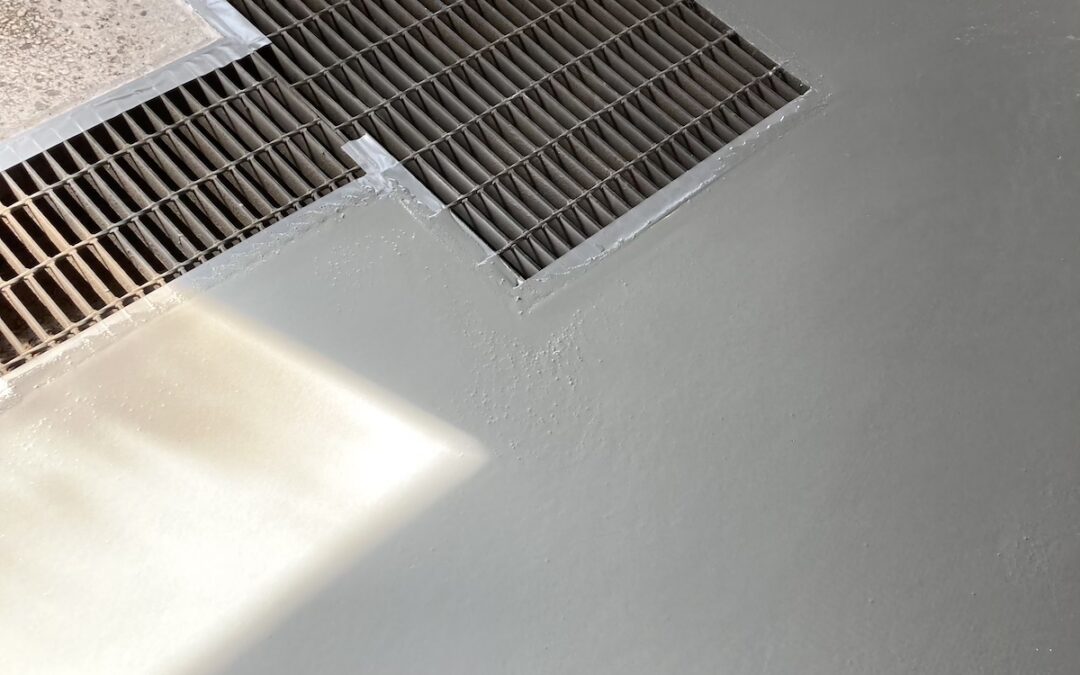
The Best Flooring for Restaurant Kitchens
A commercial kitchen is a demanding environment for a floor. Heavy traffic, high heat, and spills all need to be accounted for. The best flooring solution should handle these demanding kitchen conditions on a daily basis and last for years to come.
Commercial kitchens pose a challenging flooring environment because they need to perform a number of important functions all at once. They need a high degree of durability, heat tolerance, cleanability and non-slip all wrapped into a single system. Fortunately, modern flooring materials have come a long way and it’s possible to achieve all those things – if you have an experienced contractor who knows what they are doing.
At General Industrial flooring we have over 30 years experience designing and installing custom flooring solutions for businesses in the Greater Denver Area. We’ve installed hundreds of commercial kitchen floors and have seen our fair share of failed ones. Here are our recommendations for the best flooring materials to withstand the demanding conditions of commercial restaurant kitchens.
The Best: Urethane Cement
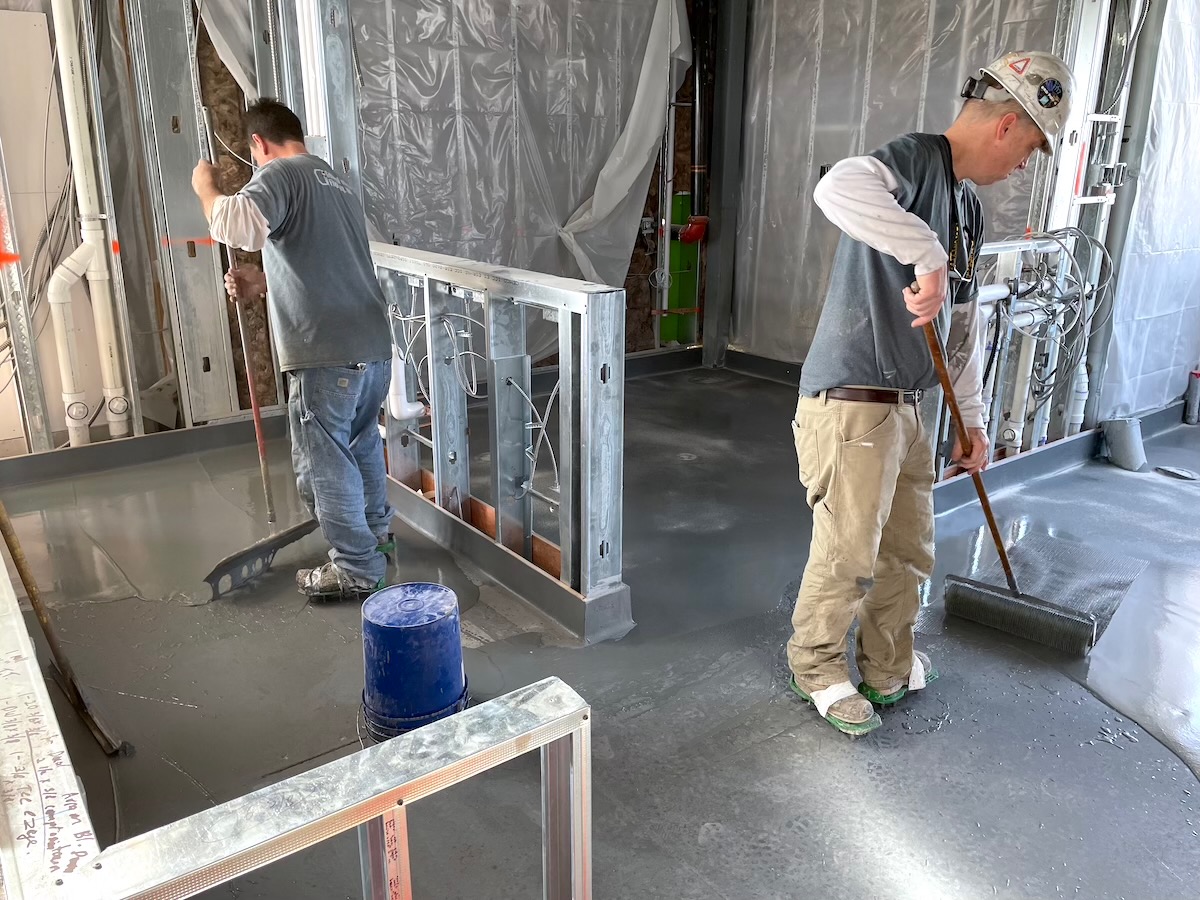
In our experience, urethane cement is hands down the best modern kitchen flooring option. With the heavy demands of a commercial kitchen floor, urethane cement outperforms epoxy in almost every way. When it comes to flooring choices, kitchen managers and restaurant owners typically have four major concerns: durability, heat resistance, cleanability, and non-slip. Urethane cement achieves them all.
Durability
Urethane cement is a highly durable material that typically is installed at 3/16 to ¼” thickness. Epoxy, by contrast, is measured in mils (1/1,000 of an inch per mil) with a typical coat of epoxy being around 10-15 mils. Thus, a completed epoxy floor system may only be 25-40 mils, whereas a 3/16” floor is 187.5 mils and a ¼” floor is 250 mils. Just on thickness alone, a urethane cement floor will be 5-10 times thicker than an epoxy floor. Additionally, urethane cement has a very strong bond to the concrete subfloor and tends to dent when something heavy is dropped on it, not chip the way epoxy would.
Heat Resistance
Typically urethane cements far outperform epoxy when it comes to heat resistance and thermal shock resistance. Direct heat from an oven and other kitchen appliances places a lot of stress on the flooring system, especially without an adequate heat shield. Urethane cement and its associated top coats can handle 250 degrees or more of temperature exposure, often continuously.
Thermal shock is the other concern in a commercial kitchen. Rapid and extreme temperature change can cause materials to contract or expand unevenly, causing costly damage. Imagine a pot of boiling water or oil being spilled on the floor. With a traditional epoxy, this dropped pot can result in the epoxy disbanding from the concrete and peeling up. Urethane cement will resist this hot liquid without risking costly damage to the floor.
Cleanability
Keeping kitchen floors clean is a serious chore. Between food scraps, oil, grease and heavy foot traffic, it’s a constant battle. Urethane cement typically has more profile than epoxy, meaning a rougher texture with more nooks and crannies for dirt to collect (the tradeoff is better non-skid). Despite this, there are a number of appropriate top coats that can modify the floor to allow for greater cleanability.
Cleaning a urethane cement floor – what to expect
For rougher floor profiles, nightly mopping with weekly deck brushing is typically recommended to keep those crannies clean. A slightly smoother/glossier profile may require less heavy cleaning. An auto-scrubber, when available, is always the best choice. In large kitchens or food production facilities where daily hot pressure washing is occurring (often multiple times a day), ¼” urethane cement floors will hold up to that hot pressure washing and the abuse that comes with it.
Non-skid Properties
Kitchens are known for spills. While we can’t prevent the food kind, we’d like to prevent the people kind. Preventing slip and fall accidents and having adequate traction on kitchen floors is of the utmost importance in a commercial restaurant environment. Urethane cement was designed for these kinds of applications. Its rougher profile performs beautifully in these critical non-skid demanding environments, providing the traction needed to keep workers safe while working with hot surfaces and sharp objects.
Style Limitations
Urethane Cement typically comes in a more limited palette of single color options. However, a more decorative floor can be achieved with hybrid urethane cement/epoxy/clear top coat options, if desired.
Additionally, urethane cement can be used to build a highly durable and fully seamless cove base, creating a continuous and seamless floor to wall transition.
Alternatives
Epoxy Kitchen Floors
Until recently, epoxy and/or polyaspartic was the standard resinous floor that would be installed in commercial kitchens. Experienced contractors would typically install a four-coat, quartz, double broadcast epoxy floor. Inexperienced contractors would install a 1-2 coat, single broadcast floor, which is an error we still see today. Those inferior floors would be sold to unsuspecting restaurant owners or GCs who would be attracted by the price only to be quickly disappointed when the floor began to disbond or fail in the weeks and months to come.
Ecogrip Flooring
Another common commercial kitchen flooring type is Ecogrip flooring. We don’t install Ecogrip, so the following will likely contain some bias, but we will only report what we’ve heard directly from our customers. We frequently hear from restaurant owners and kitchen managers that they simply don’t like the Ecogrip floors they had installed and are looking for an alternative. Those that have made the switch appreciate the fully seamless nature of resinous flooring, and they appreciate the excellent non-skid and general cleanability of urethane cement floors.
Quarry Tile Floors
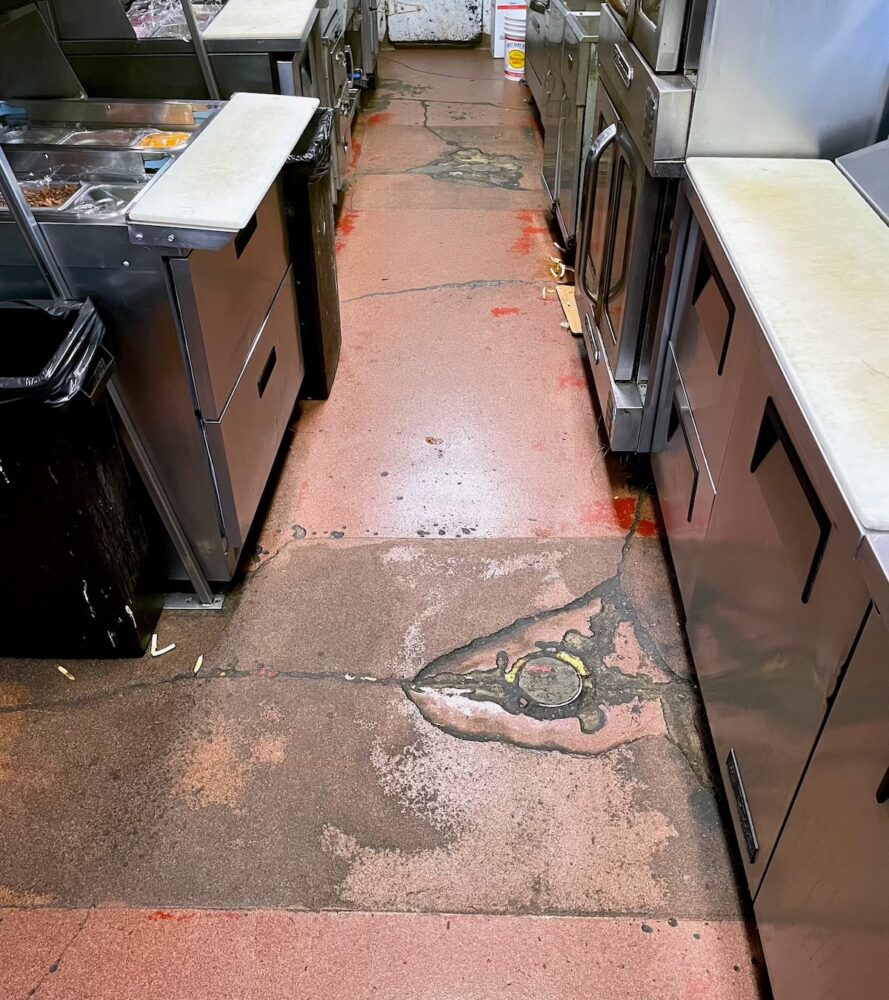
Quarry tile is a heavy duty, unglazed ceramic tile and has long been the standard go-to for commercial kitchen flooring. You can likely picture the iconic red square tiles and dark grout lines. There are many downfalls to quarry tile. The most obvious is the grout lines that capture food, dirt and grime. Second, quarry tile cove base also contains grout lines, and grout is porous. Thus water ends up getting behind it and into the drywall leading to rotted out drywall behind it. Third, quarry tile is more slippery than resinous flooring.
Check out this resurfacing project where we installed urethane cement over top of quarry tile for a public school cafeteria freezer.
Conclusion
With all of the above considerations, it’s hard to beat modern urethane cement for commercial kitchen flooring or food manufacturing applications. General Industrial Flooring installs huge amounts of this flooring material and we have placed it in countless restaurants and food manufacturing facilities throughout Colorado.
Examples of our Urethane Cement Projects:
- Commercial Kitchen in Castle Rock, CO
- Kitchen and Brewery in Dillon, CO
- Public School Cafeteria Freezers in Denver, CO
- Brewery in Denver, CO
The Best Flooring For Your Restaurant
Other flooring contractors may recommend the other flooring materials listed above because they’ve been around forever, or they’re the ones they’re most familiar with installing, or they are cheap and they stand to make a bigger profit. That’s not how we do things at General Industrial Flooring. We always recommend the best flooring for your specific application to guarantee durability and longevity, and we’ll always work with you to meet the unique needs of your specific kitchen. If you’d like to learn more or have questions about urethane cement or any other flooring options, please don’t hesitate to reach out to us.
(303) 762-1600