
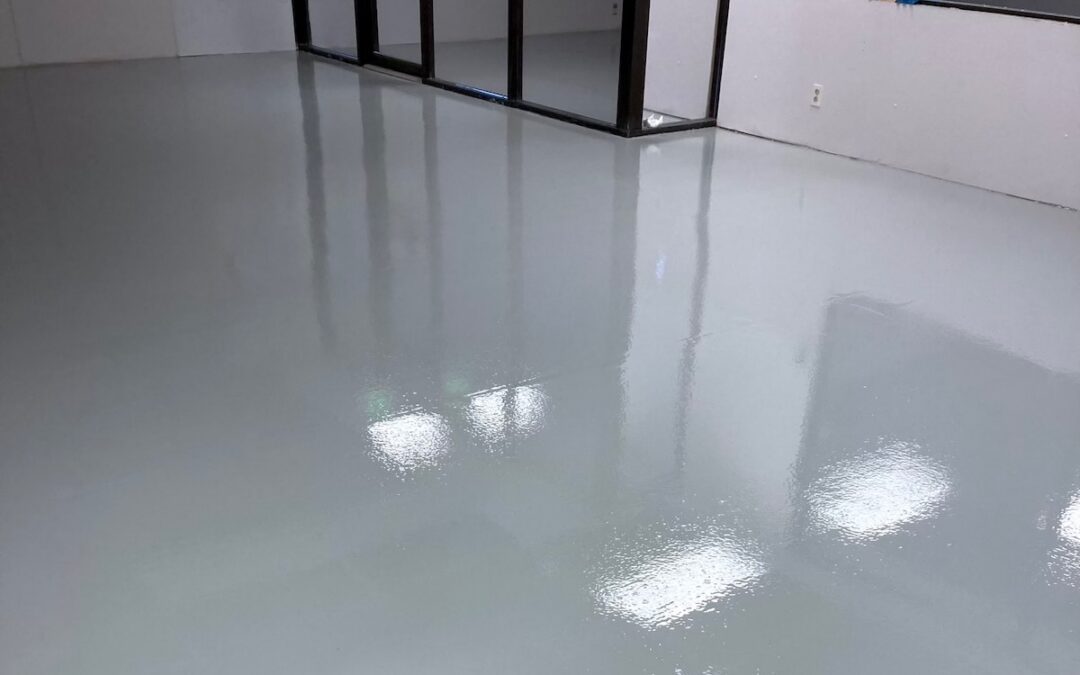
Designing the Right Floor for Your Specific Application
One size does not fit all when it comes to industrial flooring. Skimping on coats or materials can result in cracking, peeling or complete floor failure. The best flooring solution is the one that is carefully planned to meet the needs of your space.
In construction, there is an old saying that goes “If your only tool is a hammer, everything looks like a nail”. Many coatings contractors take this approach when designing a floor. They don’t take the time to ask the necessary questions and design an appropriate floor for the job it needs to do. Instead, they apply a generic solution that they’ve used time and time again. This may work in some cases, but most of the time it leads to problems and additional costs down the road.
At General Industrial Flooring, we specialize in building floors that are specific to their environment. That is, they are designed to do a specific job and hold up under particular conditions.
How we Design a Custom Floor – Our Process
Collecting Information and Asking Questions
The most important part of planning a new floor is understanding its purpose – its job to do. To understand this, we ask a lot of questions. For example, what kind of facility will the floor go into? What kind of work is being performed in that space? Does it need to have chemical resistance? Resistance against which specific chemicals? What kind of durability does the floor need to have? Does it need to withstand extreme temperatures or environmental fluctuations? Will it need to stand up to forklift traffic, heavy machinery, carts, foot traffic etc.?
Beyond that, what do you want the floor to look like? Does it need to resist electrostatic charge? Is it going in a kitchen, warehouse, manufacturing facility, food production facility, etc? These questions help us determine which materials to use in every layer of our flooring solution, so you get the exact features you need without overpaying for features you don’t.
Appearance Decisions
What do you want your floor to look like? One solid color? Colored flakes? Colored quartz granules? In nearly every application, we can achieve your desired look. Whether you want a plain gray floor or a purple metallic floor with gold sparkles, we’ll make it happen. (Disappointingly, we have yet to install a sparkly gold and purple floor, but we assure you that it is available, and if you want it, we would love to build it for you.)
Specifying Materials
Once we know exactly what job the floor needs to do, we can begin selecting the appropriate materials to build it. For a basic industrial floor, like one found in a warehouse, this could include a few coats of epoxy, polyaspartic, urethane or hybrid materials. For floors that need more durability, like those found in a food manufacturing facility such as Sysco, it may include a urethane cement base.
Sometimes we use a hybrid system to ensure durability while still achieving the desired aesthetic – think public school bathrooms or a vet clinic. Or, perhaps the floor needs to have electrostatic dissipative properties, like floors in an electrical manufacturing facility or resistance to certain chemicals or even a broad swath of chemicals, like floors in a commercial laboratory. In which case, we may include layers of specialized Novolac epoxy. There are a lot of possible combinations, but fortunately we have deep expertise in building the right floor for every job. Tell us your needs and we’ll design a floor to meet them.
Number of Coats
Looking for long-term floor performance? Proper coating is key. In the world of industrial flooring, most resinous floors typically get 2-5 coats of epoxy, but different flooring systems call for different builds. Thicker systems like a ¼” urethane cement system may only call for 2 coats since so much thickness and durability comes from the base material itself. For a flake or quartz epoxy floor, 3 or 4 coats are ideal. The additional coats allow for two broadcasts (scatterings) of aggregate (sand, flake, or quartz) into the wet resin. This provides even dispersion and an overall better appearance. The 4th coat is often essential to getting ‘just the right’ surface profile on the floor and achieving the desired non-slip properties.
Floor Texture
How smooth or rough should the floor be? We can install a full range of floor textures, from skating rink smooth all the way up to rip the boots off your feet rough. Through the materials selection, aggregate applied, and number of coats, we can achieve a very wide range of profiles to meet your specific needs.

Custom Flooring Installation Process
Once the composition of the floor is decided, it’s time to plan for installation.
Slab Evaluation
Depending on location, flooring material and other factors, some clients may want us to perform moisture testing on their underlying concrete slab before beginning installation. If a slab has too much moisture, it could result in reduced structural strength, ruined floor coverings, and surface damage, so we would want to add a moisture vapor barrier in the floor system to ensure proper moisture mitigation. Moisture testing is recommended during all epoxy applications in Colorado. If you’re unsure about the current condition of your slab please give us a call and we will take necessary steps to find out together.
Surface Preparation
Proper surface preparation of a concrete slab is necessary to ensure a quality, lasting, and well bonded coating installation. The starts with removing any existing flooring. Removing flooring requires specialized tools and experience, of which we have both. We can remove VCT, vinyl, wood, tile and/or existing mastic, thinset etc to get down to the original slab. After removal, if we discover that the slab’s concrete is damaged or has low spots, we can fill these areas with resinous flooring compatible materials prior to the installation to ensure a level and reliable base.
Once everything is removed from the slab, we prep the concrete. Preparation typically includes large, walk-behind floor grinders and/or shotblasting equipment to create a rough surface for the new flooring to adhere to. Preparation varies based on what the new floor material will be. It is essential to get an adequate concrete surface profile (CSP) to make sure the new floor has something to hold on to.
Coating installation
Cove Base
After the concrete slab has been properly prepared, the next step is typically to install cove base along the edges of the slab where it meets the wall. Industrial cove base is made of resinous mortar. It’s applied with a special trowel to create a rounded, smooth transition from the floor to the wall, eliminating the 90-degree corner that traps dirt, moisture and bacteria.
For installation, we install cove strips to a certain height (usually 4-6”) and then trowel the mortar onto the wall, up to the cove strip. We follow with another trowel to create the radiused corner at the wall to floor transition.
The result is a seamless, watertight, and sanitary transition between the floor and the wall. Cove base is not required in every industrial setting, but it is mandatory for health code compliance in food processing, healthcare facilities, and commercial kitchens, and is generally beneficial in wet environments to prevent mold growth and allow for easy wash downs.
First Coat
After cove base (or as a first step should cove base not be included in the project) we apply the first coat of resinous flooring – epoxy, urethane cement, polyaspartic, etc.
Body Coat(s)
Next we apply additional layers of flooring (body coats) as required for the project. Oftentimes we can find cost savings for our customers by incorporating specialty features (like chemical resistance) in the top coat only, and using less costly mixtures for the body coats. This will still provide a quality floor and meet the requirements of the environment without wasting expensive materials in the non-exposed layers. The ability to do this depends on the project, but we always try to save our customers money wherever possible.
Top Coat(s)
The finishing touch is the top coat. Here is where we get the finished look and texture/profile of the flooring system. This is also where we can incorporate certain characteristics into the floor like specific wear resistance, chemical resistance or ESD properties.
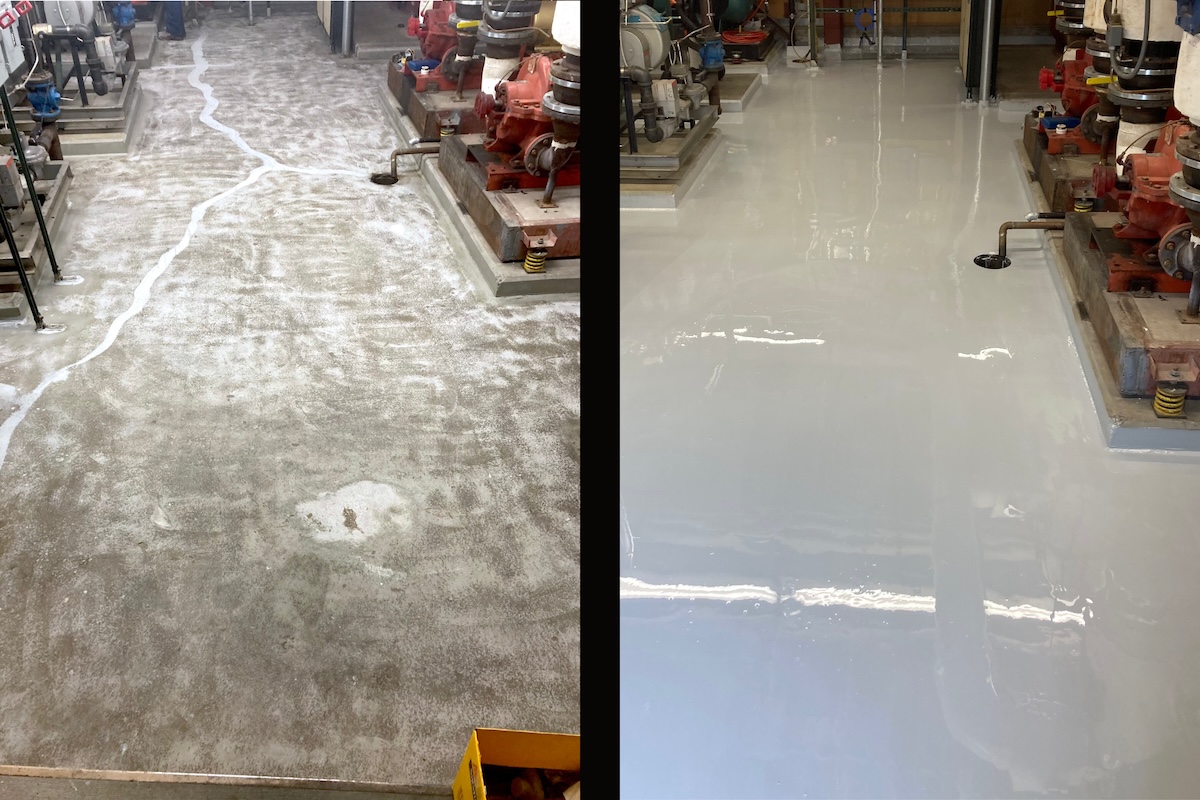
The General Industrial Flooring Difference
If you made it all the way to the end of this article (congrats!) then you now know that quite a bit of consideration and planning goes into a properly designed commercial or industrial floor installation. At General Industrial Flooring, we take the time to understand every customer’s needs and plan the correct floor for their space.
Fixing Others’ Mistakes
It’s all too common we hear from clients that, before contacting us, they hired someone who pretended to know what they were doing. Then only weeks or months later, when their floor is already failing, they realize that they got a residential garage floor installed in their commercial or industrial space and they need to start over from scratch. We hate hearing this, but take comfort in knowing that in choosing us, they will soon have a floor that meets their needs and is designed to last.
We will never be the cheapest option. That will usually be the guy promising you that his 2 coat garage floor will withstand anything (spoiler, it won’t). But there are many reasons that paying a little more for the RIGHT floor will make you much happier both in the near term and for many years to come.
Experience Matters
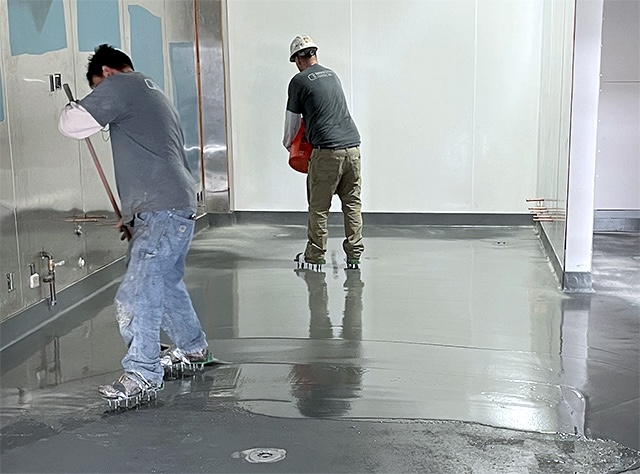
General Industrial Flooring has been in business since 1989, and there are few commercial/industrial spaces in the greater Denver area that we haven’t worked on. We have highly experienced supervisors and foreman that lead highly technical crews in installing top quality resinous floors that look great and perform as they are designed. Along the way, we have friendly, professional office staff to aid with fast estimating, contract review, submittals and close outs. We work directly with clients, national and regional GCs large and small, and as a subcontractor to other flooring companies.
We hope to speak with you soon about your project. Whether you ultimately choose us to perform the work or not, we can nearly guarantee you’ll learn something about your flooring needs and/or resinous flooring in general through speaking with us.
(303) 762-1600