
How Our Expertise Saved Time and Money on a New EMS Station
Early involvement in this new construction project allowed us to provide an optimized timeline, cost savings, and flooring solutions better tailored to the space.
Grand County Emergency Medical Services (GCEMS) recently completed its new EMS Station One facility in Granby, CO. This facility serves as the administrative headquarters, operational hub, and an Emergency Operations Center (EOC) for large-scale disasters. It also functions as a resiliency hub providing shelter and logistics for first responders.
We worked with Big Valley Construction, the general contractor on this project to install a variety of flooring types in this new, ground up EMS building.
Proactive Planning
Prior to construction, we consulted with Big Valley to understand the facility’s requirements, construction schedule, and to clarify flooring specifications. Having worked on large projects like this before, we quickly made a plan to get ahead of some scheduling hurdles and to change some of the initial flooring specifications.
Optimized Timing
To get a jump on polishing and ensure a quicker turnover at the end of the project, we did an initial grind using a coarser diamond grit as soon as the slab finished its 28-day cure.
To protect the floor from stains during construction, we applied a thin epoxy grout coat. This both sealed the floor and also filled any small cracks and pinholes in the concrete. This created a very smooth and nicely finished floor upon completion.
Material Changes
Once we understood how each area of the facility would be used, we proposed several changes to the flooring plan. We offered flooring solutions that would better meet the needs of each space and hold up better over time in the conditions of that space. Here are a few significant changes we made.
The Apparatus Bay
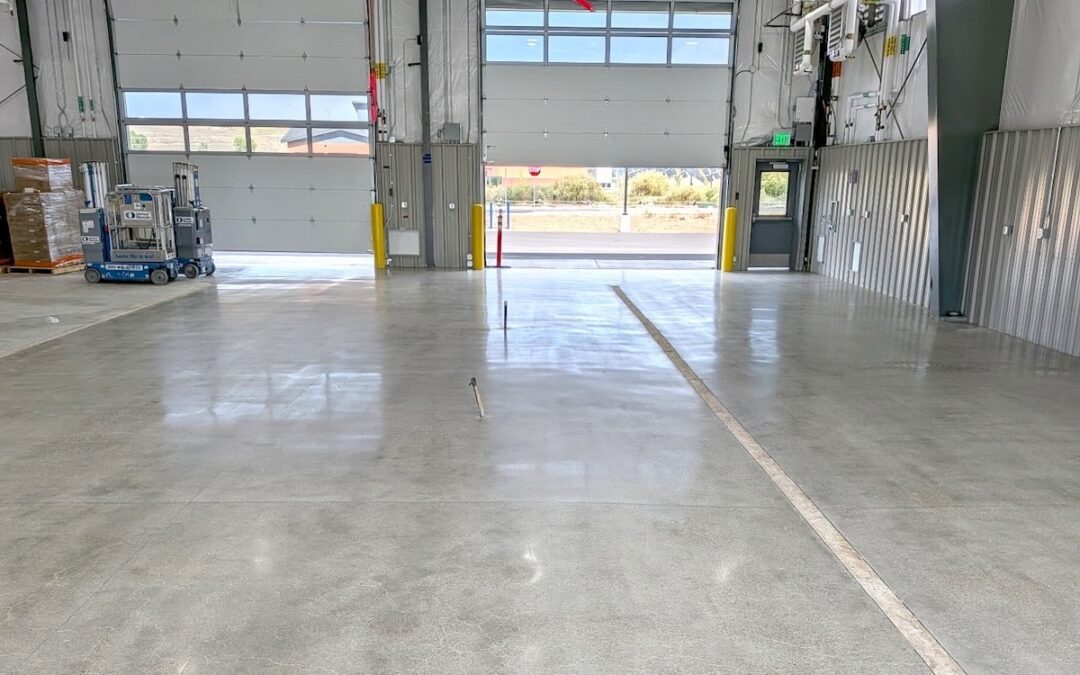
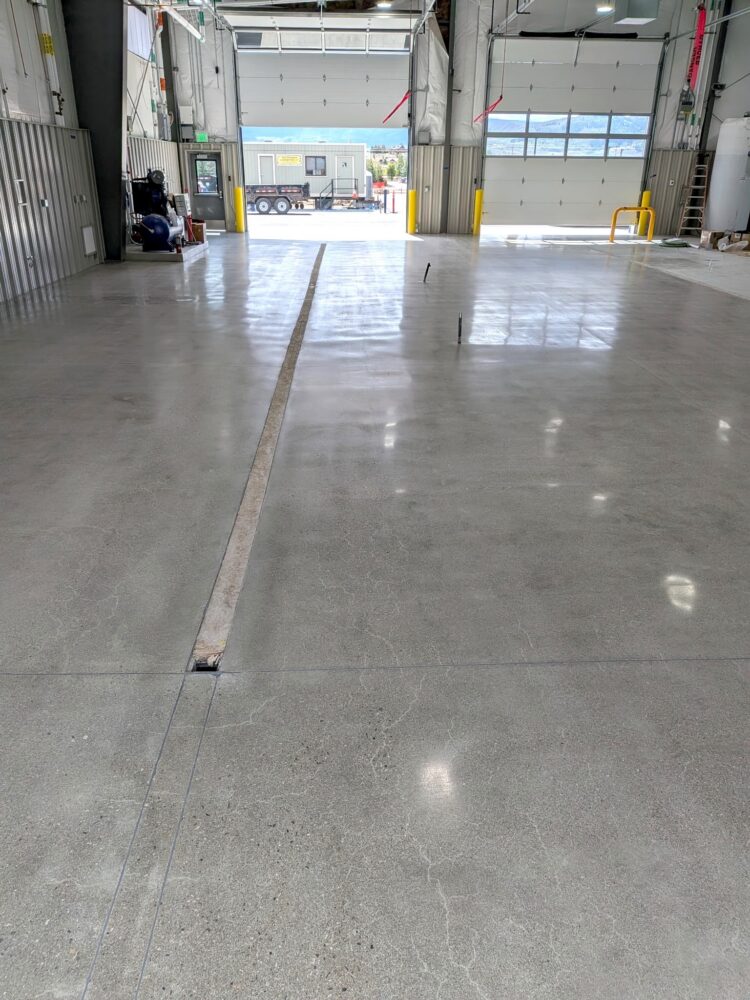
We started by suggesting a lower sheen polished concrete floor for the main portion of the apparatus bays. A lower sheen on the floor generally provides more surface texture than a glossy floor, improving traction and reducing the risk of first responders slipping when responding to a call. It also minimizes glare for drivers and requires less cleaning as glossy floors tend to show prints and dust more easily.
The Wash Bay
Along the side of the apparatus bay there is a designated wash bay for ambulances. The spec outlined a basic sealed concrete floor for this space. Having installed and recoated a number of car washes in the past, we suggested the client change the spec to a much tougher ¼ urethane cement system with a hybrid urethane/polyaspartic top coat. This system would be highly resistant to the chemicals used for ambulance cleaning and would hold up better to repeated water exposure in the long run. Whereas a concrete floor would spall and erode over time.
Locker Room Flooring
For the EMT locker rooms, we suggested a durable but attractive hybrid epoxy system to ensure a safe, non-skid surface for foot traffic and a seamless, non-porous surface that would hold up against biohazards, bodily fluids, and harsh disinfectant chemicals along with heavy boots and equipment. The system, called Hybriflex EC, consisted of a body coat of Poly-Crete SL urethane cement with a chip broadcast, a coat of MPE (epoxy) with a chip broadcast, another coat of MPE, and a top coat of Poly-Thane #3746 to resist scratching and chemicals.
Cost Savings
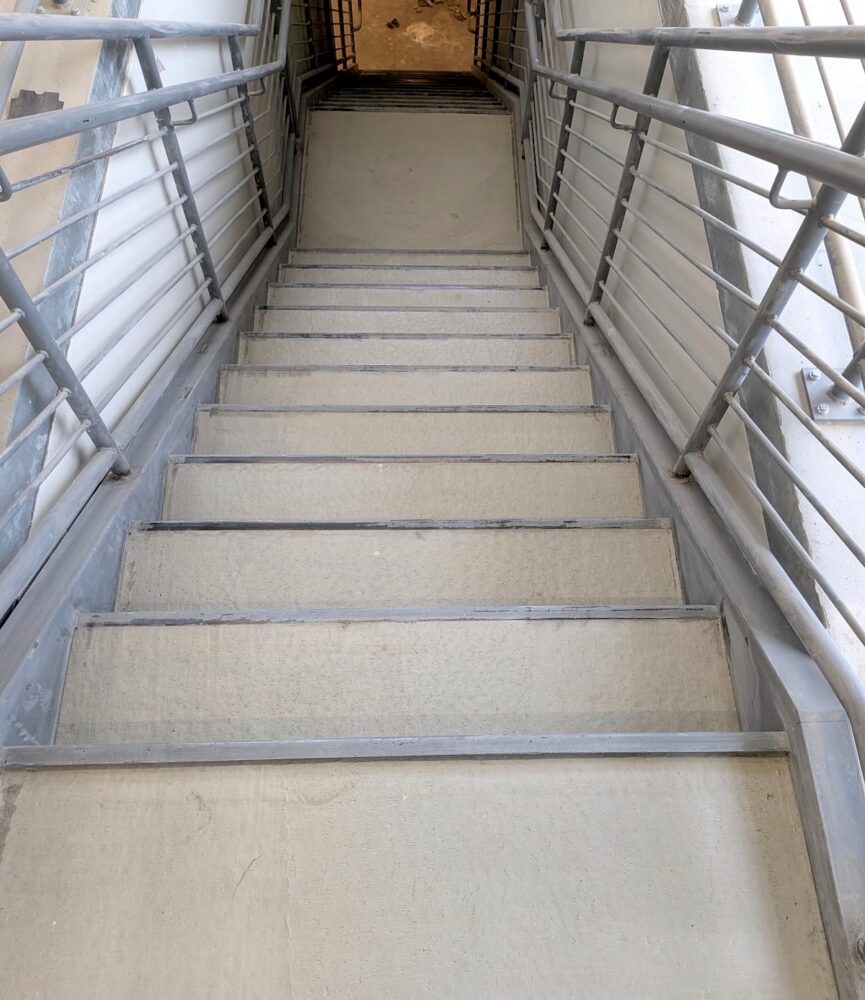
All of the mechanical, electrical and utility rooms initially called for polished concrete. However, as a more cost-effective and equally functional alternative, we suggested that we grind and seal the concrete. This seemingly simple change saved thousands of dollars.
Summary
Whenever possible, we like to be involved from the beginning on projects. Not only are we experts at installing various flooring materials and systems, but we also can provide expert consultation on what works and what doesn’t. Something may look good on paper, but in reality it may pose safety hazards or may not be practical for the needs of the space. Whenever possible, it’s far better to rely on our many years of field experience to guide you. Often we can find better, more cost-effective ways to get the desired look or functionality. You’re always better off with a system designed to perform the job it needs to perform vs. a floor that may look decent but ultimately doesn’t perform and/or fails prematurely.
(303) 762-1600