
Types of Aggregate in Epoxy Floors
What is aggregate and why is it used in epoxy flooring?
Industrial and commercial epoxy floors often include aggregate to achieve various functional and decorative results. Let’s break down what aggregate is, what types of aggregate are used in resinous flooring and what results it can achieve.
What is Aggregate?
Aggregates are the tiny pieces of rock, stone, minerals, mica, or vinyl that are mixed into epoxy and other resinous flooring. Their purpose can be functional–like creating a durable, non-slip surface, decorative–like adding colorful speckles, or both. Different aggregates can be broadcast into various resinous flooring materials to achieve various results.
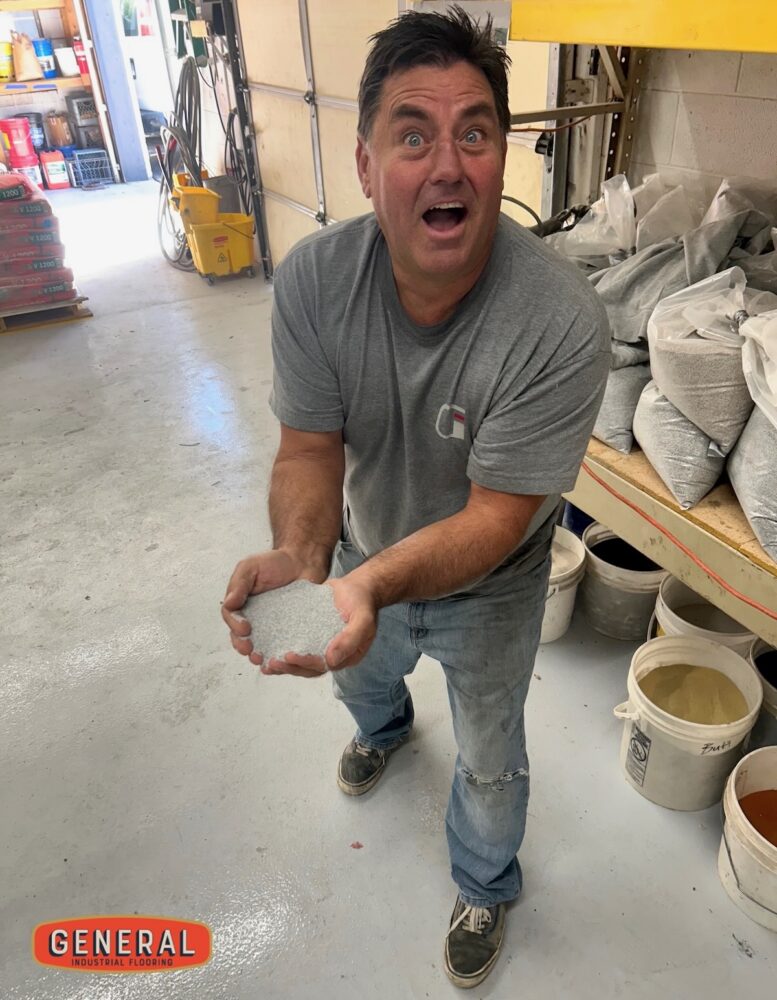
Common Aggregates
The primary aggregates used in epoxy flooring are clear quartz sand, colored quartz sand and vinyl flake. There are some other more exotic aggregates such as mica flakes, but they are rarely used.
Clear Quartz Sand
Clear quartz sand is primarily used to add thickness to a single-color epoxy floor, or urethane cement floor. Clear quartz does not add any decorative properties to the floor. Its purpose is strictly functional. After being broadcast, it is typically covered up by additional layers of epoxy, depending on the desired profile/texture of the floor.
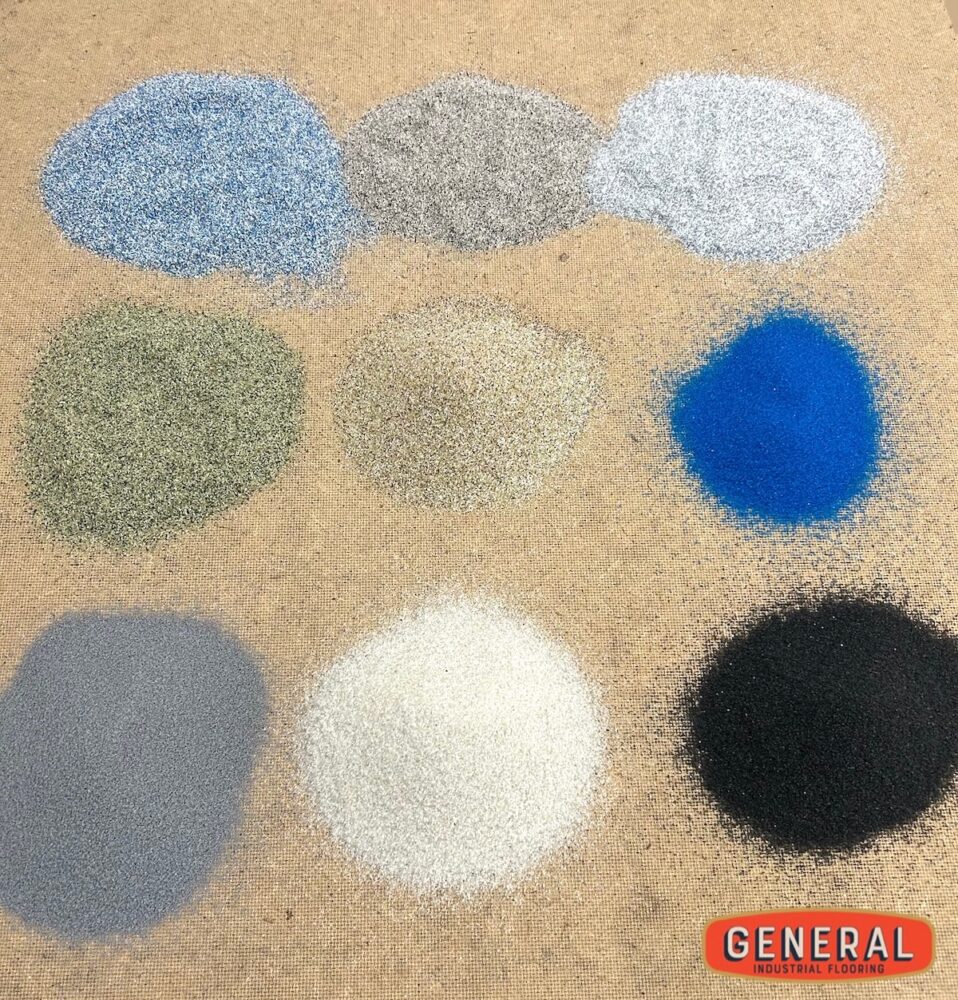
Colored Quartz Sand
This may seem obvious, but colored quartz sand is essentially the same as clear quartz sand, but colored. It comes in a variety of colors which then get blended in different quantities to make colored quartz blends. These blends are then broadcast into the flooring system to make the floor decorative. After colored quartz sand has been broadcast, clear layers of epoxy are applied on top to get the desired flooring profile/texture. Colored quartz almost always requires a double broadcast to get full, even coverage that looks good.
Vinyl Flake
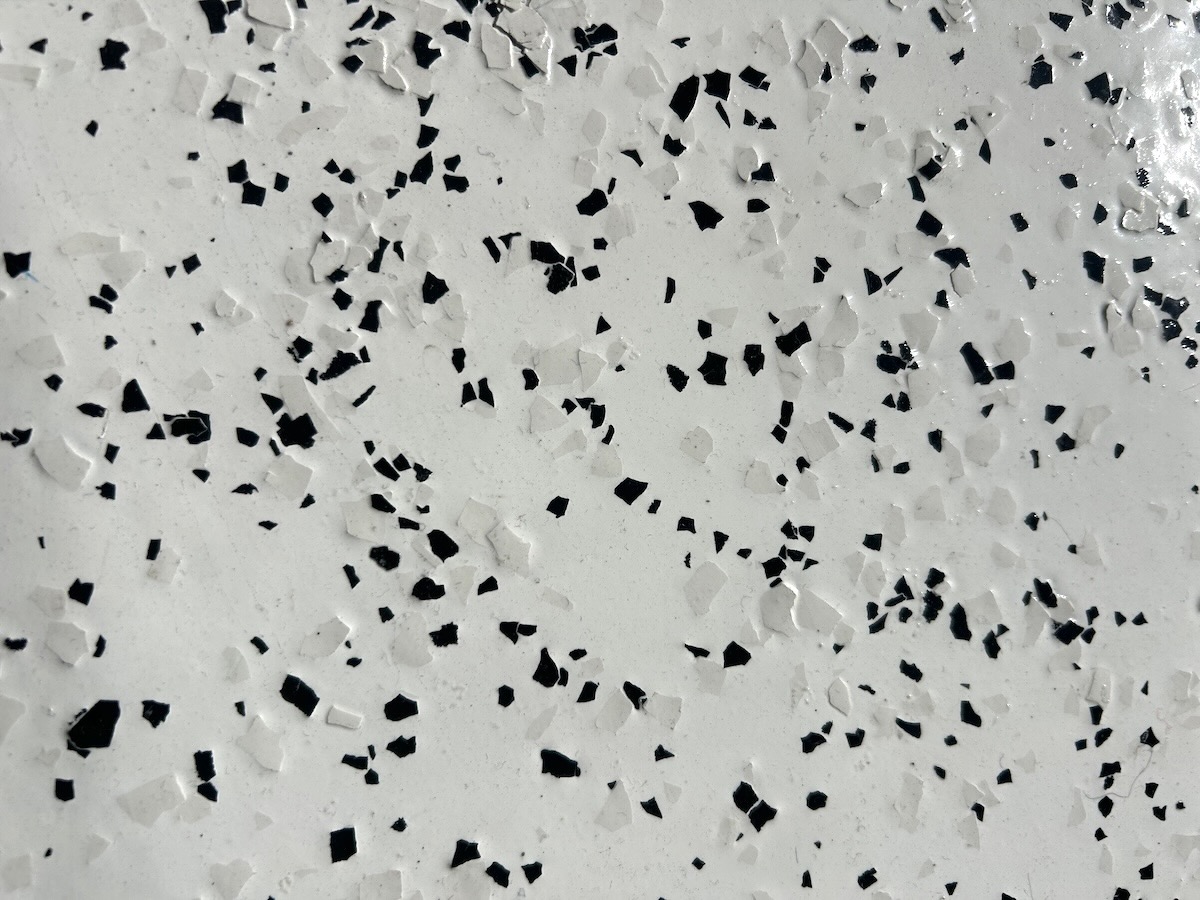
Vinyl flake is what most people think of when they think of epoxy floors (think colorful speckles). It is the typical aggregate used in a residential garage floor, for example. An installer can either install vinyl flake over a tinted background with a single broadcast, or they can perform a double broadcast so that nothing shows through the flake.
When comparing flake to quartz, quartz tends to be the better commercial/industrial choice because quartz is a strong substance that adds strength to the floor. Flake does not add strength or durability to the floor in the same way that quartz does, it’s purely decorative.
Aggregate For Flooring Profile / Texture
In industrial and commercial settings, aggregate is used often to strengthen the overall resinous flooring system, but how it’s installed may vary based on how the space will be used. For example, a floor in a commercial kitchen will be very different from a floor in a hospital. Both spaces need strong floors to hold up to foot traffic and heavy equipment, but a kitchen will be exposed to water and food spills and a hospital will remain mostly dry. So the flooring in the commercial kitchen needs to have a higher profile (rougher texture) to be non-skid and prevent slip and fall accidents. The hospital floor can be smoother to provide easier cleaning and wheeling of carts and machines.
Adjusting The Floor Profile
The primary way to adjust the flooring profile is by adding aggregate to different layers during the installation then covering that aggregate with more/less resinous material to adjust how smooth the floor is. Thick/multiple layers of epoxy will cover more of the aggregate, creating a smoother finish, whereas thin/single layers leave more of the aggregate exposed, creating a rougher profile. Additionally, aggregate such as sand or vinyl flake can also be sanded in between coats of epoxy to further smooth the aggregate.

How Aggregates Are Applied
Typically aggregates are broadcast to rejection. This is a fancy way of saying the sand or flake is thrown by hand out of a bucket onto a wet epoxy layer until the epoxy won’t accept any more of that aggregate (flake or quartz as described above). That wet layer no longer looks wet because it is so packed with sand or flake. Some companies (like ours) have invented machines that use air power to shoot the aggregates out instead of throwing them by hand on large projects. This method provides a more even dispersion of aggregate and saves some time during installation.
How to Know When Aggregate is Needed
The short answer is, as a client, you don’t need to know. When you hire an experienced flooring contractor they will select the appropriate aggregates to achieve your desired results. In other words, you tell us how you want your floors to look and perform, and we make it happen.
As a side note, General Industrial Flooring is one of the only companies in Colorado that still creates its own quartz blends. We can often match existing floors from years ago that others cannot. Similarly we can modify others blends to make them darker, or lighter or even change colors to suit your preferences and build something custom. We’ll always work with you to create a floor that looks good without compromising on performance.
(303) 762-1600