
Repairing a failed floor at an
operational food processing plant
Installing the wrong floor in a specialized facility can cost you time, money, safety, legal compliance and operational efficiency. Fortunately, we have the expertise to fix it.
Background
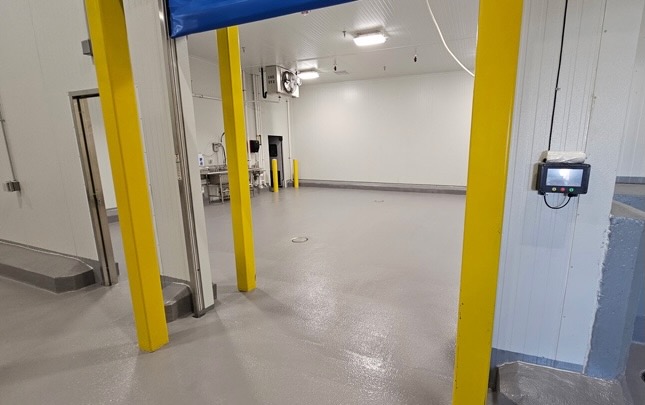
A general contractor came to us with an issue. The subcontractor they had originally hired to install the floor at their nearly 13,500 sq. ft. meat, fish and poultry facility in Denver had failed them. The inexperienced flooring contractor had recommended and installed a basic epoxy floor which was entirely not suitable for the job it was selected to do.
Inadequate Materials Fail Fast
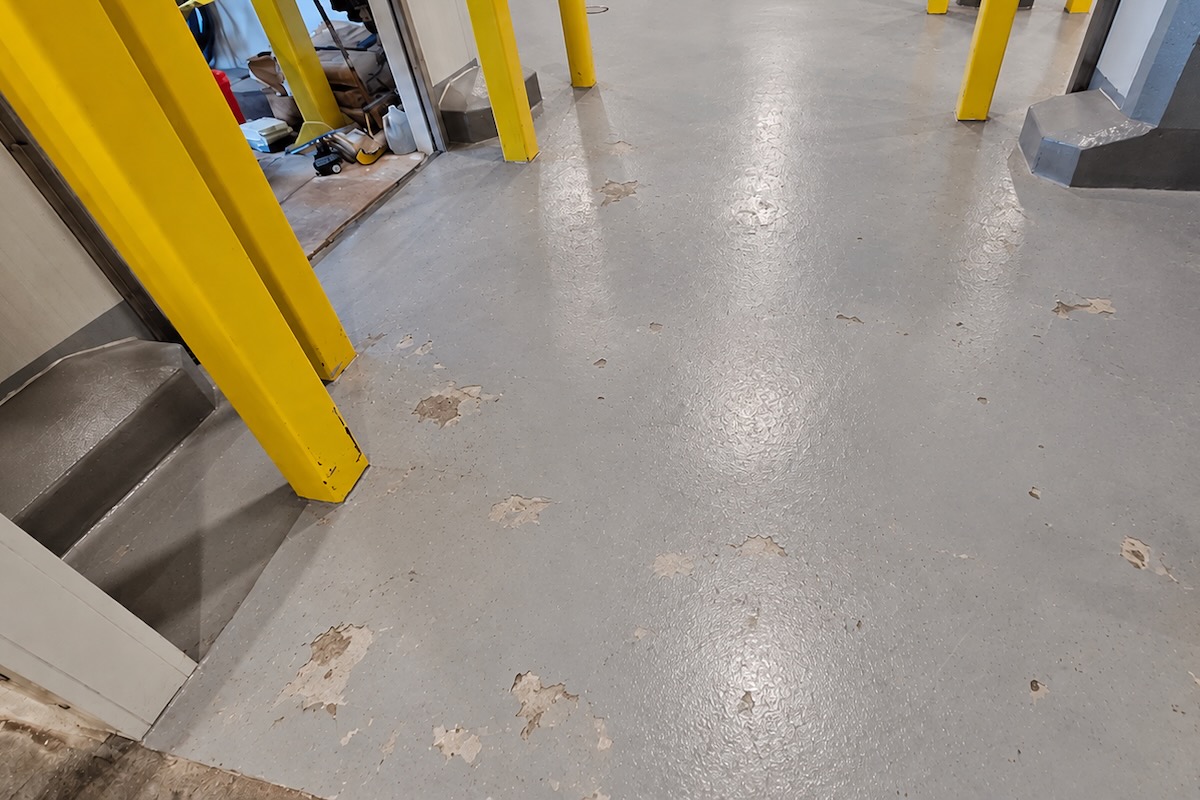
After being installed, this initial floor was subjected to hot pressure washing multiple times a day, a continuously wet environment, as well as the heavy traffic and wear of a meat processing facility. Within weeks, the insufficient coating began failing – disbonding from the concrete slab and chipping off. Chipped flooring poses a severe risk to food safety, worker safety and regulatory compliance, not to mention the structural integrity of the building if water or cleaning materials seep into the exposed subfloor.
Obvious Wrong Choice
When we were approached to determine the cause of failure and find a solution, we knew immediately that an epoxy floor was the wrong choice for this application. With the extreme conditions of this environment, something substantially heavier duty was needed.
Additional Challenge
A failing floor is stressful enough on its own, but this facility was now in-service, operating daily to meet market demands with little time to spare on facility repairs. We had to repair the floor in a way that allowed operations to continue so the client wouldn’t suffer substantial costly downtime.
Choosing the Appropriate Flooring System
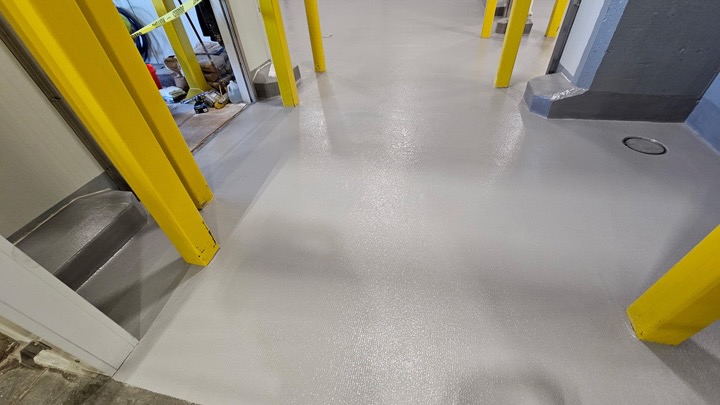
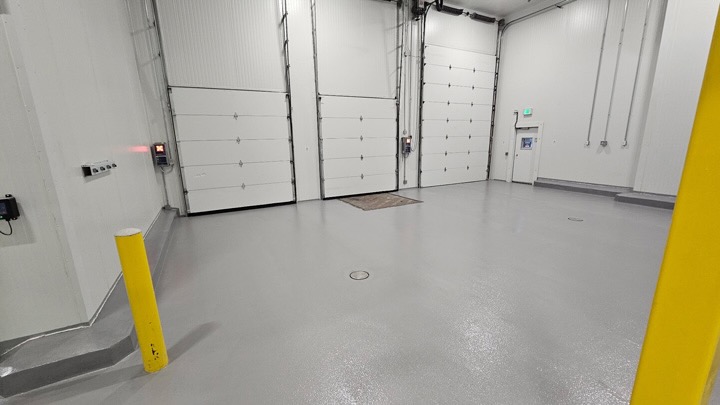
With our 30 years of experience in industrial flooring solutions, we’ve worked on every type of food processing facility and knew immediately what was needed here. We recommend grinding off the existing failing epoxy coating and replacing it with a ¼ inch urethane cement floor. The floor would be topped with a heavy-duty, purpose-driven top coat. This system would provide plenty of non-skid traction. It would resist the thermal shock and physical shock of frequent hot pressure washing, allowing the floor to be cleanable without damage. It would have substantial durability and it would, of course, meet USDA requirements.
Scheduling and Phased Construction
Once we had the appropriate flooring system designed, we still needed to figure out how to install it without interrupting the client’s operations. To do this, we held multiple meetings, pulling in the necessary stakeholders – management, supervisors, facilities, and the general contractor. We coordinated a phased approach whereby we would install flooring in each of three processing areas one at a time. One area would be temporarily taken out of service and shared across the other two areas while we worked on it.
Expedited Delivery
Even with the phasing figured out, we still needed to work as quickly as possible through each phase to limit the downtime for the client and get them back to full operations as soon as possible. To speed the process, we had our entire roster of employees dedicated to this project and brought in additional subcontracted labor to help expedite the surface prep and laying of the floor.
Staying Accountable
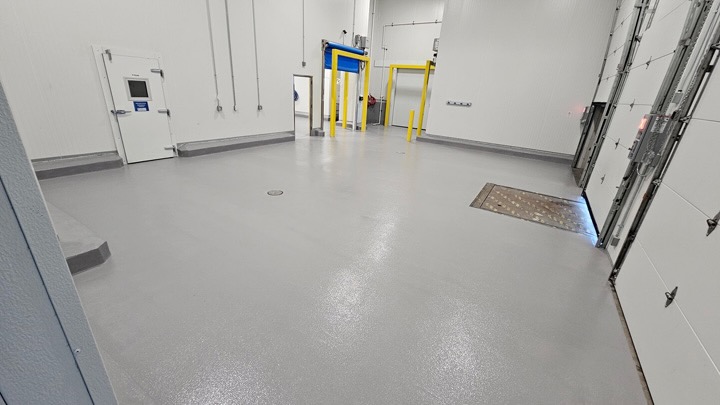
The stakes were high on this project. Our client had been burned once before and we were determined to instill trust with our client and demonstrate our value as experienced flooring contractors. We set specific deadlines and a strict project schedule. We met each milestone as planned and delivered an on-time, heavy-duty, high performance, industrial floor to the client. We’re happy to report that the new floor met all the needs of space and has the longevity and durability to last for years to come.
We Know Floors
At General Industrial Flooring, we’ve seen a lot of botched floors in our 30+ years of business and this wasn’t the last of them. Fortunately we have the experience and expertise to install floors correctly the first time and we’re also available to repair the work of bad contractors. If you have a failing floor and need an experienced flooring contractor to ensure it gets fixed and stays fixed, call us. Or better yet, call us the first time around and save yourself the headache.
(303) 762-1600